When you come across a slim suit in a shop window and hesitate between being too dressed up and being too dated, it’s often because you’re unknowingly mixing several sub-currents from the 1960s. The fashion style of the 1960s for men does not form a uniform block.
Between the beginning of the decade, which is still very conservative, and the end, saturated with colors and psychedelic patterns, radically different looks are created. Knowing where you stand in this timeline changes everything.
Progression of Men’s Style Throughout the 1960s
The early sixties are marked by the legacy of the 1950s. Men wear straight suits, neutral colors, and white shirts. The cut is structured, and the silhouette is understated.
From the middle of the decade, the Mod movement imposes a sharp turn. Jackets shorten, trousers tighten, and ties become slim. We start to see geometric patterns and bright colors on shirts.
The end of the 1960s shifts towards a more liberated style, influenced by counterculture. Floral shirts, wide collars, flared trousers, saturated colors. The contrast with the beginning of the decade is striking.
This progression is a concrete tool for building a credible retro look. An outfit that mixes a fitted Mod jacket with a floral shirt from 1969 creates a visual anachronism. It’s better to choose a specific slice and stick to it, even detailing 1960s men’s fashion on Buzzarium to spot the pieces associated with each period.
Fitted Suit and Mod Silhouette: The Foundation of the Retro Men’s Look
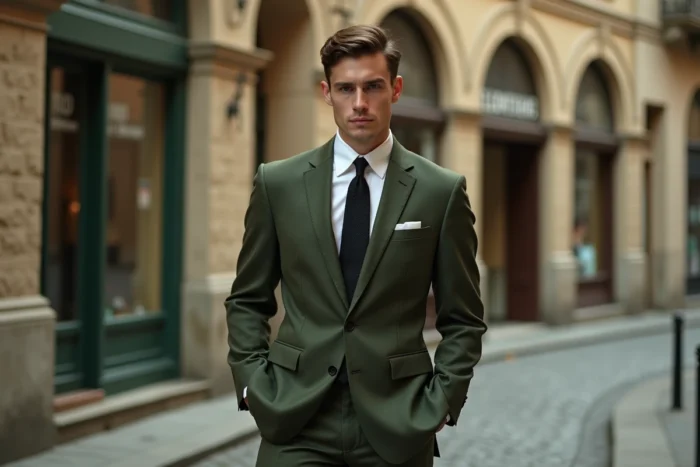
The Mod style remains the easiest sub-current to integrate into a current wardrobe. Its logic is based on a slim and structured silhouette: short jacket, narrow trousers, fitted shirt.
Building the Silhouette with Three Pieces
The jacket should stop at the hips, not below. Two buttons, narrow lapels. The trousers are tapered, without a pronounced crease, with a length that reveals the ankle or shoe without excessive break.
The slim tie completes the ensemble. We’re talking about a width of a few centimeters, far from the wide ties of the following decades. This detail alone anchors a contemporary suit in a sixties aesthetic.
The interest of this combination (short jacket, narrow trousers, slim tie) goes beyond a retro nod. It visually structures the torso and elongates the silhouette, which works for most body types.
Adapting the Mod Suit for Everyday Wear
Wearing a complete three-piece suit remains reserved for formal contexts. In everyday life, one can extract isolated elements. Tapered canvas trousers with a button-down shirt and desert boots create a discreet sixties effect, suitable for both the office and the city.
Opinions vary on the issue of colors. Sticking to navy blue, medium gray, and beige keeps things easy to match. Bolder shades (burgundy, forest green) work better as accessories or standalone pieces.
1960s Men’s Shoes: The Detail That Grounds the Look
Competitors talk a lot about jackets and trousers, rarely about shoes. This is a mistake. The shoe determines the degree of formality of the retro look and its overall coherence.
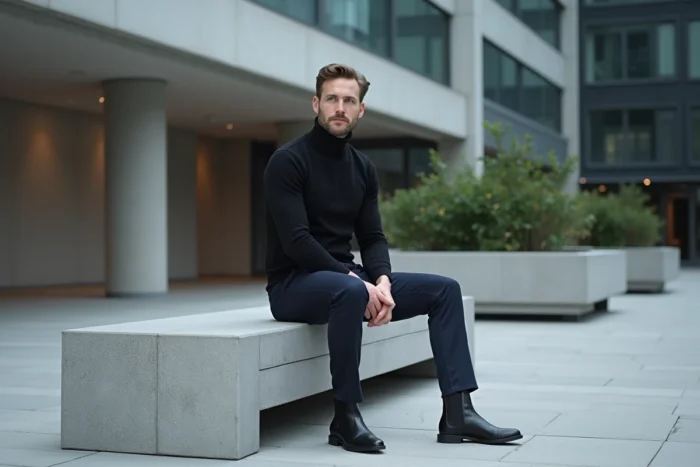
- Chelsea boots, with their elasticated shaft and slim profile, are the most versatile choice. They transition effortlessly from suit to jeans and remain the most recognizable visual marker of the Mod style.
- Cuban-heeled boots add a bolder, almost rock touch. They work well with dark tapered trousers and a solid shirt.
- Tassel loafers fit a preppy style, closer to the Ivy League American style of the early sixties. Worn without socks in summer, they modernize a beige chino.
- Suede desert boots remain the most casual option. They fit into a sixties-inspired casual look without being overdone.
The classic trap is to pair a sixties top with contemporary sneakers. The mismatch disrupts the reading of the look. It’s better to opt for a basic pair of Chelsea boots than a technical sneaker that breaks the visual unity.
Patterned Shirts and Accessories: Balancing Retro Without Falling into Costume
The shirt remains the most expressive piece of the sixties men’s wardrobe. Two options stand out depending on the period you aim for.
For an early to mid-decade style, a solid shirt with a narrow collar (buttoned or not) is sufficient. White, light blue, pale pink. The fabric should be dense enough to hold its shape without appearing transparent.
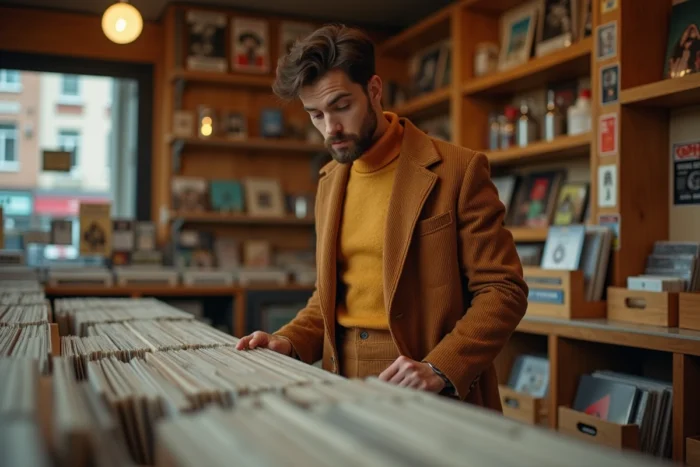
For a late-decade style, the Hawaiian or floral-patterned shirt comes into play. It can be worn open over a solid t-shirt or tucked into high-waisted trousers. The balance holds to a simple rule: if the shirt is strong in patterns, everything else must remain neutral.
Accessories That Make a Difference
- Thick-framed sunglasses (like Wayfarers) serve as an immediate visual anchor in the sixties.
- A thin leather belt, without a bulky buckle, maintains the coherence of the slim silhouette.
- A round dial watch with a leather strap, without sporty complications, completes a dressed wrist without overload.
The most underestimated vintage accessory remains the pocket square. A square of solid fabric or micro-pattern slipped into the breast pocket transforms a basic suit into period attire. No need for elaborate folding; a simple visible triangle is enough.
The retro men’s look of the 1960s relies more on the coherence of the silhouette than on the accumulation of vintage pieces. A well-cut pair of trousers, a pair of Chelsea boots, and a slim tie are more effective than a whole wardrobe of approximate reproductions. You choose your slice of the decade, select three or four key pieces, and keep the rest understated.