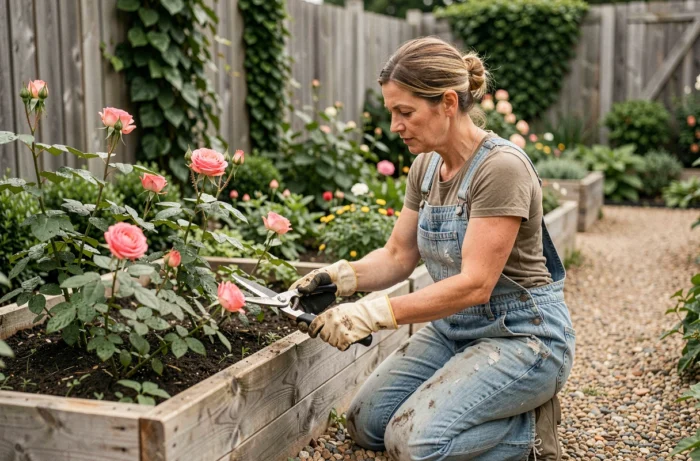
A living soil conditions everything else. Before planning crop rotations or choosing resistant varieties, we recommend treating the garden as an ecosystem where every intervention has cascading effects on the substrate structure, beneficial fauna, and the water cycle.
Watering regulations and garden adaptation
Water restrictions are no longer an occasional hazard. The four official levels of restriction (vigilance, alert, heightened alert, crisis) defined by the Ministry of Ecological Transition apply every summer in an increasing number of departments. Starting from the alert level, watering ornamental gardens is prohibited during the day, and at the crisis level, it may be completely banned.
Non-compliance can result in a 5th class fine of up to 1,500 euros, increased to 3,000 euros in case of a repeat offense within twelve months. Inspections are carried out by the French Office for Biodiversity, the police, and the gendarmerie.
This regulatory reality transforms water-saving practices (mulching, drip irrigation, rainwater harvesting) into prerequisites for maintaining a functional garden in summer. A gardener who does not incorporate these constraints from the design of their flower beds and vegetable garden risks losing their plants during a late prefectural order. Specialized resources like infojardinage.com allow for tracking these developments and adapting cultural practices accordingly.
Mulching and ground cover: the foundation of reduced maintenance
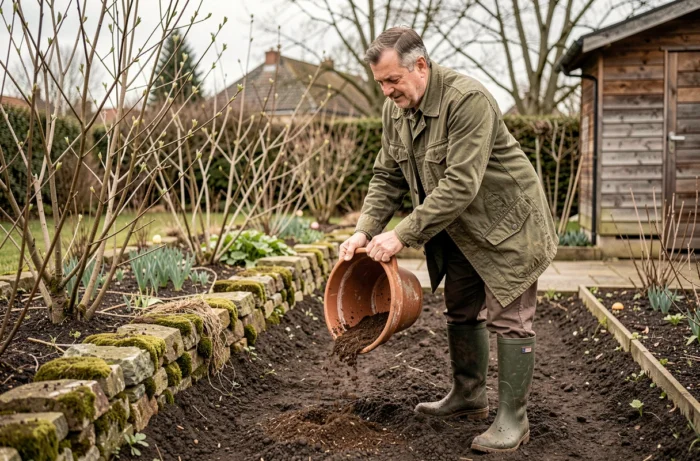
Mulching is the technique that offers the best return on investment in time. A properly applied layer of mulch reduces watering, limits weeding, and nourishes the soil as it decomposes. We observe that most gardeners underestimate the necessary thickness.
For organic mulching (wood chips, straw, dead leaves), aim for a sufficient thickness to block light at the soil level. If too thin, the mulch decomposes in a few weeks and allows weeds to pass through. If too thick on wet clay soil, it promotes fungal diseases at the base of the stems.
- BRF (fragmented branch wood): suitable for shrub beds and hedges, it stimulates mycorrhizal activity but consumes nitrogen at the beginning of decomposition. Compensate with a supply of mature compost at the base of nutrient-hungry plants.
- Straw or hay: perfect for the vegetable garden between rows, to be renewed during the season as decomposition is rapid. Be cautious of undried hay that may contain weed seeds.
- Shredded dead leaves: a free resource in autumn, ideal for covering perennial flower beds before winter. Shredding accelerates decomposition and prevents leaves from forming an impermeable mat.
- Mineral mulch (slate, pumice): reserved for Mediterranean plants or gravel areas. It does not nourish the soil but limits evaporation and does not decompose.
Soil fertility without chemical inputs: operational calendar
A fertile soil is built over several seasons. Surface composting and green manures advantageously replace mineral inputs provided a precise calendar is followed.
Autumn and winter: cover and prepare
As soon as the harvests in the vegetable garden are finished, we recommend sowing a green manure (mustard, phacelia, rye) rather than leaving the soil bare. The roots structure the substrate deeply, and the biomass mowed in spring provides an organic matter supply directly in place.
On ornamental beds, autumn is the time to spread a layer of mature compost. Winter rains gradually incorporate nutrients without mechanical work. Avoid turning the soil with a spade, which disturbs the fauna and exposes organic matter to too rapid mineralization.
Spring and summer: nourish at the right time
Spring fertilization targets high-demand plants: fruiting vegetables (tomatoes, squash), lawn after scarification, summer-flowering shrubs. A diluted nettle manure provides nitrogen and trace elements, but its use should remain occasional to avoid unbalancing the soil.
In summer, the priority shifts to moisture conservation rather than fertilization. A dry soil does not release its nutrients. Mulching and localized watering (drip irrigation, oyas) maintain biological activity in the top few centimeters of the substrate.
Shrub pruning and lawn management: common technical mistakes
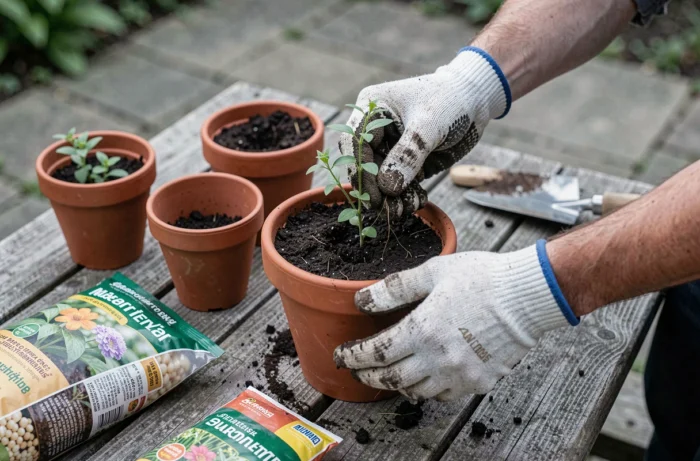
Pruning is the maintenance gesture most poorly executed in amateur gardens. Pruning a flowering shrub at the wrong time removes the flowering of the following year. The basic rule: shrubs that bloom on last year’s wood should be pruned just after flowering, not at the end of winter.
For lawns, cutting height makes more difference than mowing frequency. A cut that is too short weakens the grasses, encourages weeds, and increases watering needs. We recommend never removing more than one-third of the blade height at each pass, and raising the cutting height during dry periods to protect the grass crowns.
Scarification, often neglected, remains the most effective gesture for regenerating an old lawn. It should be done in spring or early autumn, on slightly moist soil, followed by reseeding of bare areas.
Micro-irrigation and rainwater harvesting in the garden
Drip systems and buried oyas are explicitly allowed even during restrictions, provided that rainwater is used or that the schedules defined by the local prefectural order are respected. This exemption makes micro-irrigation not optional, but strategic.
A properly sized drip network delivers water directly to the root zone, with no loss from evaporation or runoff. Combined with a timer and a pressure reducer, it operates autonomously for several days.
Rainwater harvesting transforms a regulatory constraint into an advantage. A modest surface roof generates a sufficient volume of water to cover the needs of a family vegetable garden during dry months, provided there is a suitable storage tank.
Maintaining a garden year-round relies less on multiplying actions than on their correctness. A covered soil, targeted irrigation, and thoughtful pruning avoid most corrective interventions. The regulatory framework related to water restrictions makes this reasoned approach not only desirable but necessary.