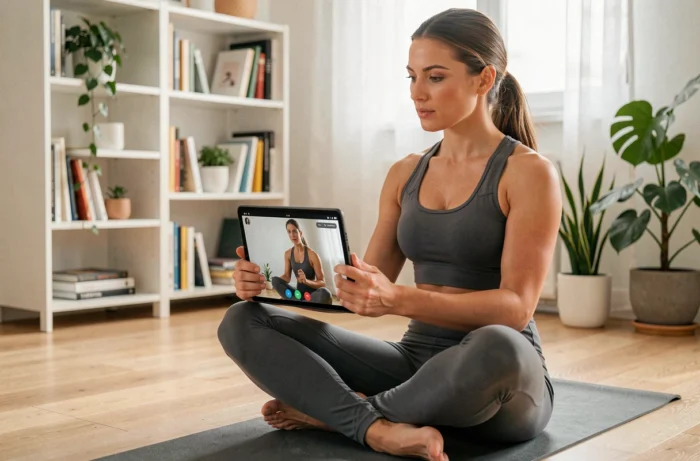
Finding an online personal trainer suited to your goals involves checking criteria that are rarely highlighted by platforms: legality of status, format of follow-up, frequency of adjustments. Before comparing offers, it’s essential to know what you’re measuring and on which points the differences between trainers are truly significant.
Professional card and RNCP diploma: the legal filter for online personal training
The Sports Code, via article L212-1, regulates any paid sports coaching activity. This obligation does not distinguish between in-person and remote. An online personal trainer offering individualized follow-up (personalized program, movement correction via video, paid advice) must hold a diploma registered with the RNCP and a valid professional card.
The professional card for sports educators is now digital. Clients can request this card, scan the QR code, and verify in seconds that the trainer is registered and authorized to practice. This check takes less than a minute and immediately eliminates non-compliant profiles.
Matching platforms rarely display this criterion visibly. During your search, you can cross-reference available profiles on moncoachsportifenligne.fr with this card verification to filter trainers who operate within a legal framework.
Comparison of online coaching formats: video, app, asynchronous follow-up
The term “online personal training” encompasses very different realities. The confusion between these formats explains a significant portion of disappointments. Here are the three main models and what separates them concretely.
| Format | Coach-client Interaction | Personalization | Observed Price Range |
|---|---|---|---|
| Live video conference | Real-time, postural correction possible | High (adaptation during the session) | High segment (comparable to in-person) |
| App-based program with follow-up | Asynchronous (messages, video feedback) | Medium to high depending on the frequency of exchanges | Mid segment |
| Generic online program | Almost none | Low (standard plan) | Low segment |
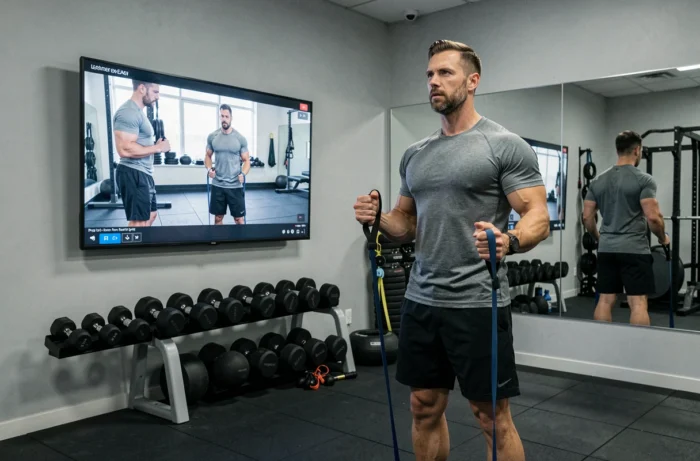
The first format replicates the conditions of a session at home or in a gym. The trainer observes, corrects, and adjusts weights or postures in real-time. However, it requires a stable connection and sufficient space at the client’s location.
The second format dominates the market. The trainer sends a weekly or monthly program, the client executes the sessions on their own, and then provides feedback (videos of movements, heart rate data, feelings). The quality depends on the frequency and accuracy of adjustments made by the trainer between cycles.
The third format is more about digital content than coaching. There is no individualized relationship. The low price reflects the absence of real follow-up.
Criteria for selecting an online personal trainer based on the targeted goal
Platforms offer filters by discipline (weight training, running, fitness, Pilates, health sports). This classification by activity is not enough. Two trainers labeled “weight training” can offer radically different services depending on their actual specialization.
- For a goal of weight loss or fitness, prioritize a trainer who incorporates a nutritional aspect or collaborates with a dietitian, and who adjusts the program every two to four weeks based on concrete markers (measurements, performance on reference exercises).
- For a specific physical preparation (running, combat sports, military or firefighter competition preparation), check that the trainer has documented experience in the discipline, not just a general diploma.
- For a senior audience or those with disabilities, a diploma in adapted physical activities (APA) is a reliable marker. A CQP Fitness Instructor does not cover this area of expertise.
The number of recommendations or client reviews remains a useful indicator, provided you read the content of the reviews and not just the rating. A trainer with a few detailed reviews describing measurable results offers more assurance than a profile with dozens of vague comments.

Frequency of adjustments and duration of commitment: the two underestimated variables
The majority of online coaching offers operate on a monthly subscription basis. The prices observed on French platforms vary significantly, from around twenty euros per month for minimal follow-up to several hundred euros for comprehensive support with video sessions.
The monthly price alone does not allow for a comparison of two offers. This rate must be related to the number of actual interactions with the trainer over the period. A subscription at 80 euros per month with a weekly assessment and program adjustments every two weeks represents a better investment than a subscription at 150 euros with only one monthly exchange.
The duration of commitment is another variable to consider. Some platforms offer à la carte classes without commitment. Others impose a minimum of three months. For a general fitness goal, a no-commitment format allows testing compatibility with the trainer before committing long-term. For physical preparation with specific goals (time for a half-marathon, weight lifted), a commitment of a few months gives the trainer time to structure a coherent progression.
Online personal training: what legality and format reveal about quality
The first reflex is to check the digital professional card before any registration. This check eliminates profiles that do not comply with the Sports Code, including remotely. The second reflex is to identify the actual format of the proposed follow-up (video, asynchronous, generic) and relate it to the requested price.
Personalized online personal training is measured by the frequency of adjustments, not by the number of pre-recorded sessions in a library. Trainers who document their evaluation methods and set regular assessments with their clients provide a verifiable progression framework, regardless of the displayed price.