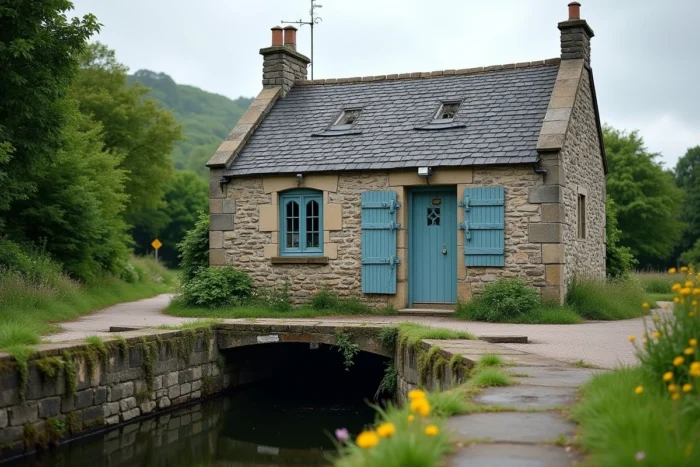
Breton lock houses are not just charming houses by the water. They are buildings linked to the public river domain, subject to specific occupancy rules, and located on canals where tourist traffic is increasing year after year. For a tourism entrepreneur, this combination creates a precise opportunity, provided they understand the mechanisms.
Temporary Occupancy Agreement: The Business Model Preferred by Entrepreneurs
Can you imagine buying a lock house like you would buy a longère? The process is different. The majority of these buildings in Brittany remain attached to the public river domain. They are not subject to a traditional sale.
The most common framework is the temporary occupancy agreement (COT). The owning community (often the Region or a community of municipalities) entrusts the building to a project leader for a defined period, in exchange for a fee. The entrepreneur does not buy the walls; they obtain a right of use.
This model attracts creators of tourist activities for a simple reason: the initial investment focuses on development, not on land. The starting budget is significantly lower compared to a traditional real estate purchase by the canal. Candidates wishing to invest in a lock house for sale in Brittany often discover that the term “for sale” actually covers these agreements, rather than traditional notarial transactions.
Some lock houses may be sold after a procedure to declassify them from the public domain. This case remains rare and requires long administrative delays. For a tourism project to be launched within a reasonable timeframe, the COT remains the main lever.
Calls for Projects in Brittany: How Communities Select Candidates
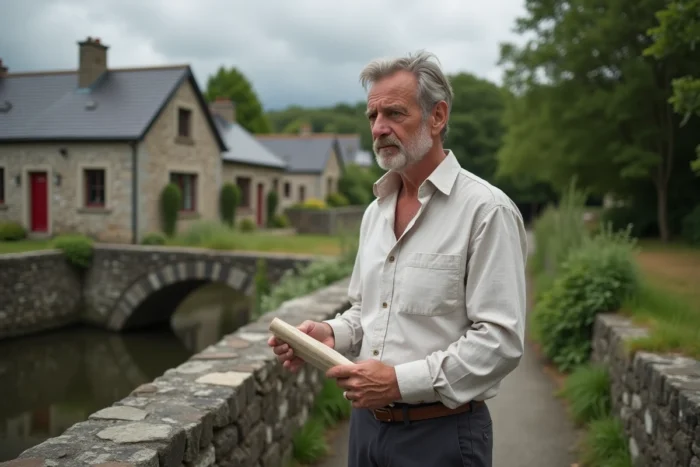
Lock houses are not found on regular real estate portals. The Brittany Region and intercommunalities launch calls for projects to assign these buildings to entrepreneurs.
The call for projects from the Brittany Romantique community of municipalities, published at the end of 2024 for the lock houses of Gacet, La Moucherie, and La Ségerie, illustrates the process well. The selection is primarily based on the quality of the proposed tourism project and the candidate’s references (motivation, team, experience).
What the Juries Prioritize
- The coherence of the project with the tourism enhancement of the canal, not just financial profitability
- The candidate’s ability to carry out the development work, knowing that these buildings often require heavy renovation
- The integration into the existing local offer: guesthouses, water activities, hiking trails along the waterways
The Centre-Finistère has launched a similar call for two lock houses, with a stated goal of reviving underutilized heritage sites. The project takes precedence over the budget presented: communities are looking for committed operators, not passive investors.
Increasing Tourist Traffic: A Favorable Context for Unconventional Accommodations
Why are tourism entrepreneurs looking at the Breton rivers now? Because the attendance figures are trending positively.
According to INSEE, the summer tourist season of 2025 in France recorded a 3.7% increase in attendance compared to 2024, with 257.8 million overnight stays in collective accommodations. This national dynamic benefits rural and river destinations, where the demand for unconventional stays is growing faster than average.
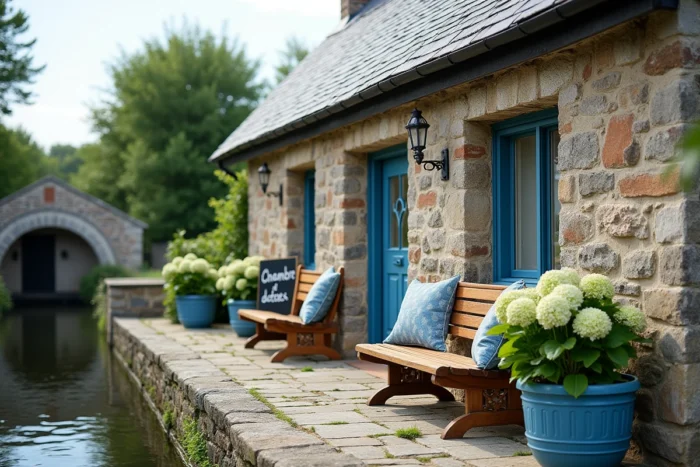
A lock house converted into a guesthouse or bed and breakfast on the Ille-et-Rance canal, the Nantes to Brest canal, or the Blavet positions itself in a specific segment: river and heritage tourism in Brittany. Travelers who navigate or cycle along the towpaths seek short stops, with accommodations that are part of the experience.
A Positioning That Limits Direct Competition
Lock houses are rare by nature. There are only a limited number along each canal. An entrepreneur who obtains a temporary occupancy agreement on one of them is not in direct competition with the dozens of rural guesthouses in the area. The building itself, with its history and location by the lock, provides a differentiation argument that tourism communication can easily exploit.
Renovation Constraints and Energy Standards: What Affects the Budget
The appeal of the model should not overshadow the technical constraints. Most Breton lock houses date back to the 19th century. Their renovation involves specific expenditure items.
- Work by the canal is subject to easements related to the public river domain, with permits to be obtained from the managing community
- Current energy standards (RE 2020 for new constructions, DPE requirements for renovations) impose high-performance insulation, which can conflict with the heritage character of the building
- Access to networks (water, sanitation, electricity) varies greatly from one lock to another, with some houses being connected and others requiring autonomous solutions
An entrepreneur preparing their application for a call for projects must integrate these costs from the candidacy phase. Communities expect a realistic work plan, not an optimistic estimate.
The status of the occupancy agreement adds an additional constraint: investments made in the building remain with the public owner at the end of the agreement. Therefore, the duration of the contract must allow for the amortization of the work undertaken, a negotiation point that should not be overlooked.
Breton lock houses offer an atypical framework for tourism investment, driven by the rise of river tourism and structured calls for projects. The model works for entrepreneurs willing to navigate a specific legal framework and demanding renovation work, not for buyers seeking a classic real estate investment.