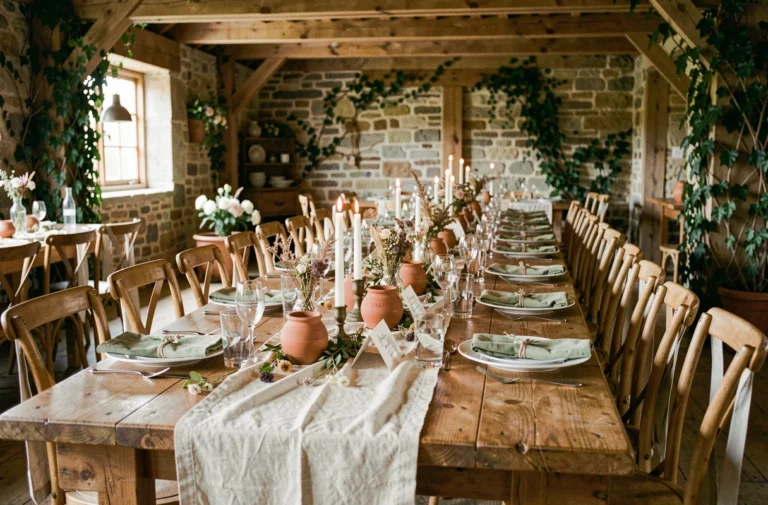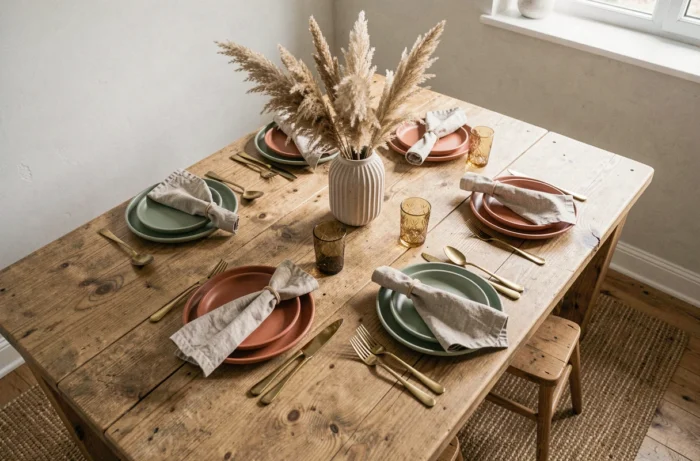
Your everyday table tells something about you, even when you don’t think about it. The choice of a plate, the color of a bowl, the texture of a placemat: these details create an atmosphere. This season’s tableware and decor trends reflect an underlying movement, where visual pleasure meets very concrete concerns about sustainability and food safety.
European PFAS Regulation and Tableware: What Changes in Practice
You may have noticed that some brands are now promoting “PFAS-free” ranges. This is not an empty marketing argument. Since August 12, 2026, the European PPWR regulation (EU 2025/40) imposes very strict limits on PFAS in food contact packaging and tableware: 25 ppb per targeted PFAS, 250 ppb for the total sum.
In practice, plates, cups, and disposable tableware used for serving are directly affected. Manufacturers who used PFAS-based non-stick or waterproof coatings must reformulate their products.
This same regulation stipulates that starting January 1, 2030, disposable plastic tableware will be banned on-site in restaurants. Restaurants, hotels, and cafes are already anticipating this deadline by shifting towards reusable ranges. This transition directly influences what you find in stores: durable tableware designed to be washed and reused hundreds of times is gaining ground over disposables.
Meanwhile, regulation (EU) 2024/3190 on bisphenol A is pushing manufacturers to develop bisphenol-free glasses and coatings. If you are looking to renew your table glasses, check that the chosen collection mentions this compliance.
To follow tableware trends at La Table de Jeanne, you will find a comprehensive overview of collections that incorporate these new regulatory requirements.
Stoneware, Handmade Ceramics, and Textured Porcelain: Choosing the Right Material
Why this massive return to raw materials? Because they meet two simultaneous expectations: a warm visual appeal and everyday durability.
Stoneware and Ceramics for Everyday Use
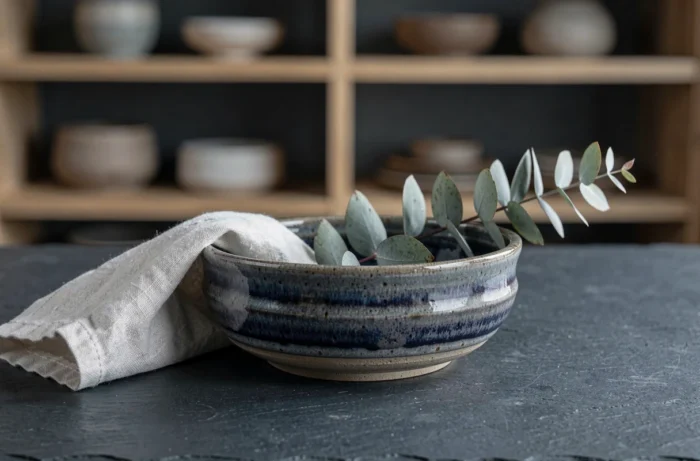
Stoneware is a high-temperature earthenware. It withstands thermal shocks, is dishwasher safe without degrading, and its slightly irregular surface gives each piece a unique character. Stoneware collections offer matte finishes, sometimes rough, reminiscent of stone.
Handmade ceramics go further in embracing imperfection. Each plate features slight variations in color or shape. It is this irregularity that creates the identity of a table: two plates from the same batch are never perfectly identical.
Textured Porcelain for Special Occasions
Porcelain has not disappeared, but it is reinventing itself. New collections add reliefs, surface texture effects, and wavy edges. We move away from the smooth, shiny porcelain of classic services to pieces that are visually and tangibly engaging. Textured porcelain maintains its delicacy while adding visual depth.
Natural Color Palette for Contemporary Table Decor
The dominant colors of this season move away from pristine white and bright hues. The palette refocuses on tones directly inspired by nature:
- Sand beige and cream, which match all styles of tablecloths and kitchens
- Sage green, discreet but present enough to structure a table without overwhelming it
- Muted terracotta and soft brown, which bring warmth without falling into rusticity
These shades work particularly well together. A cream stoneware service paired with terracotta bowls and sage green tinted glasses creates a cohesive table effortlessly. The idea is not to match everything identically, but to stay within a close chromatic range.
Handmade Tableware or Minimalist Design: Two Complementary Approaches
Are you torn between a handmade plate with irregular edges and a plate with a clean, geometric design, perfectly calibrated? Both trends coexist this season, and they combine better than one might think.
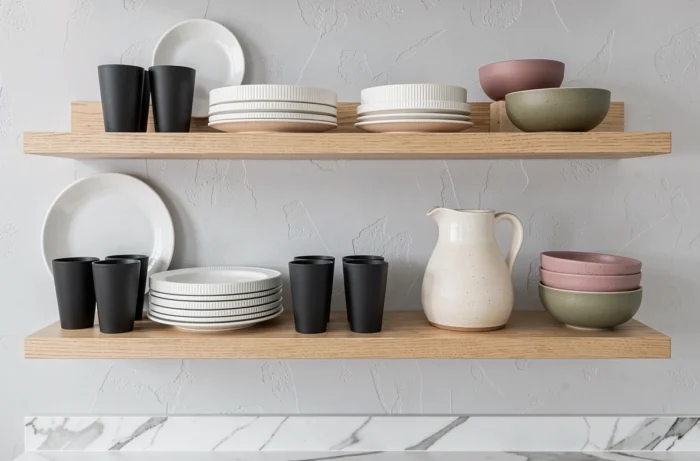
Warm minimalism relies on simple lines, round or slightly oval shapes, and a total absence of patterns. The plate becomes a neutral frame that highlights the content. This style works very well for everyday use because it pairs with everything.
The artisanal approach, on the other hand, emphasizes uniqueness. Each piece bears the mark of the potter’s hand. You will find drips of glaze, variations in hue, and irregular textures. It is a more assertive choice that adds character to a meal.
The combination of the two creates an interesting contrast. A minimalist flat plate in white porcelain, paired with a handmade textured stoneware bowl, adds depth to the table without overwhelming it. This mixed approach is, in fact, what distinguishes contemporary tables from overly uniform setups.
Sustainable Table: Concrete Criteria to Check Before Buying
Sustainability is not just a label on the packaging. When renewing your tableware, a few practical criteria can help make a truly sustainable choice:
- Check dishwasher and microwave compatibility, ensuring everyday use without excessive precautions
- Favor materials fired at high temperatures (stoneware, porcelain) that resist chipping and scratching
- Ensure compliance with PFAS and BPA standards for items in direct food contact
- Choose open collections, meaning ranges that the manufacturer produces over time, allowing for replacement of a broken piece without having to buy a complete service
The trend towards reusable tableware, accelerated by the PPWR regulation, is also pushing manufacturers to offer more durable pieces. A good stoneware or textured porcelain service can last several decades with minimal maintenance.
Renewing your table setting this season does not need to be total. A few artisanal pieces added to an existing service, a set of bowls in a new hue, glasses without bisphenols: these targeted adjustments are enough to refresh a table while respecting a reasonable budget and safety requirements now well-regulated by European legislation.