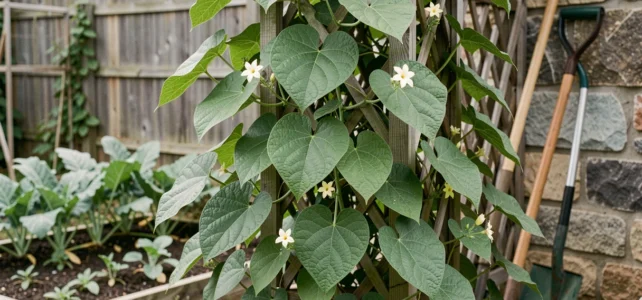
The chayote (Sechium edule) is a perennial climbing gourd whose flowering is not triggered by the size of the plant, but in response to the decrease in day length. This physiological characteristic, often absent from standard cultivation guides, explains most of the disappointments encountered by gardeners in temperate climates.
Photoperiod and Floral Triggering of the Chayote
The chayote is a short-day plant. Specifically, its flower buds only form once the photoperiod falls below a certain threshold, usually at the end of summer. Before that, even a vigorous plant several meters tall will remain strictly vegetative.
This mechanism distinguishes the chayote from most garden gourds (zucchini, cucumbers) that flower relatively early after sowing. For the chayote, flowering occurs after a long growth phase, often only when the days noticeably shorten, that is, in September or October in our latitudes.
Understanding the flowering period of the chayote allows for anticipating this delay and adjusting expectations. A plant that does not flower in July is not abnormal: it is waiting for the light signal.
Late Flowering in Temperate Climates: The Real Calendar
In Mediterranean regions or southern France, flowering generally occurs between late August and early October. The further north you go, the later it is, sometimes until mid-October.
The phase between the appearance of the first flowers and the harvest of the fruits takes several weeks. The chayote fruit grows slowly, and the plant needs continuous warmth to complete fruiting.
Regions Where Flowering Leads to Harvest
In areas with mild autumns (southern Atlantic coast, Mediterranean perimeter, lower Rhône valley), the plant has enough time to flower and then produce fruits before the first cold. In contrast, in central or northern France, the useful window between flowering and frost is often too short.
Frost before fruiting is the main factor of failure in outdoor cultivation, more so than lack of vigor or care. The plant grows abundantly, flowers late, and then is caught by the cold.
Soil and Exposure Conditions to Favor Flowering in the Garden
While the photoperiod controls floral triggering, other factors can accelerate or delay the process. A stressed or poorly nourished plant will take longer to build up the reserves necessary for flowering.
- A soil rich in organic matter, deep, and well-drained promotes rapid plant growth in spring, giving it more leeway to flower early at the end of summer.
- A full south exposure, ideally against a wall that radiates heat in the evening, extends the useful season by several weeks.
- Regular watering without excess is preferable: the chayote poorly tolerates waterlogged soils, especially in clay soil, but prolonged water stress hinders flowering.
- A solid support (trellis, pergola, fencing) allows the climbing plant to spread properly and expose maximum foliage to light, optimizing photosynthesis before the reproductive phase.
Nitrogen promotes vegetation, but excessive input can delay flowering in favor of leaf production. Reducing nitrogen fertilization from July helps direct the plant towards reproduction.
Growing Chayote Outside Favorable Zones: Possible Strategies
For gardeners in regions where autumn arrives quickly, a few techniques can help gain time on the calendar.
Early Planting Under Shelter
Germinating the chayote fruit as early as February-March indoors, then planting it in the ground after the last frosts, gives the plant a vegetative advantage. The longer the spring growth, the sooner the plant will be ready to flower as soon as the photoperiod allows.
Autumn Protection of the Plant
A winter cover placed over the structure of the climbing plant can gain a few degrees during the first cool nights of October. Protecting the chayote from the first frosts extends the fruiting window by two to three weeks in certain situations.
In pots or containers, cultivation remains possible but significantly limits root development. Harvests will be modest, and flowering may sometimes be even later than expected.
Recognizing Flowers and Distinguishing Male and Female Flowers
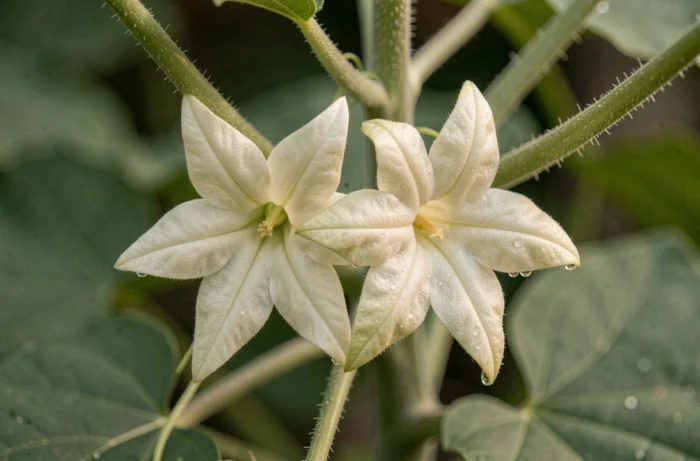
The chayote is a monoecious plant: each plant bears separate male and female flowers. Male flowers often appear in clusters, while female flowers are solitary or in pairs, located in the leaf axils.
The flowers are small, pale greenish-white, and easily go unnoticed in the dense foliage of the plant. Observing the nodes of the secondary stems closely from late August allows for spotting the first signs of flowering.
Pollination is ensured by insects, notably bees. A garden devoid of pollinators will limit fruit set even if flowering occurs normally. Promoting biodiversity in the vegetable garden (nectar-rich flowers nearby, absence of chemical treatments) improves the chances of obtaining fruits.
The chayote remains a crop of patience in temperate climates. Those who understand that the plant waits for the decrease in light to flower, and that every week gained in spring translates to autumn, have the two real levers to harvest chayotes in their garden.